IR Flock Sheet

€960,00 €22,00

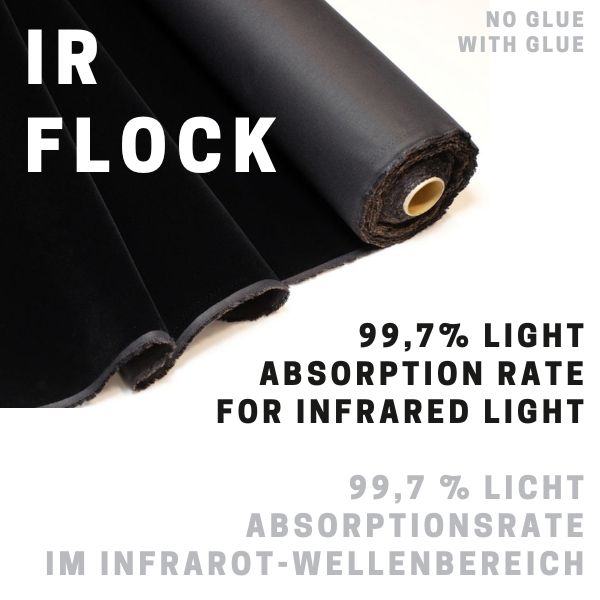
IR FLOCK SHEET Near-Infrared Anti-Reflection Material for Industrial Optical Systems The IR Flock Sheet is a highly absorbing, electrostatically flocked rayon material specifically developed to reduce reflections and...

Size:

Glue :

  • Trusted by Researchers

    Used by universities, laboratories and optical engineers worldwide.

  • Technical Documentation Available

    Datasheets, RoHS, REACH and absorption data for many products.

  • Worldwide Shipping

    Direct shipping to customers in over 50 countries.

IR FLOCK SHEET

Near-Infrared Anti-Reflection Material for Industrial Optical Systems

The IR Flock Sheet is a highly absorbing, electrostatically flocked rayon material specifically developed to reduce reflections and stray light in the visible and near-infrared spectral range. It was designed for applications where ordinary black materials no longer appear sufficiently dark in the Near-Infrared (NIR) range — for example in LiDAR development, near-infrared sensing, machine vision, sensor calibration, optical test environments and industrial measurement systems.

✓ Visible + NIR absorption

Very high light absorption not only in the visible range, but also in the Near-Infrared range.

✓ ≤ 0.5% total reflectance

The IR Flock Sheet achieves a total reflectance of 0.5% or less from the visible to the near-infrared range.

✓ Flexible flocked surface

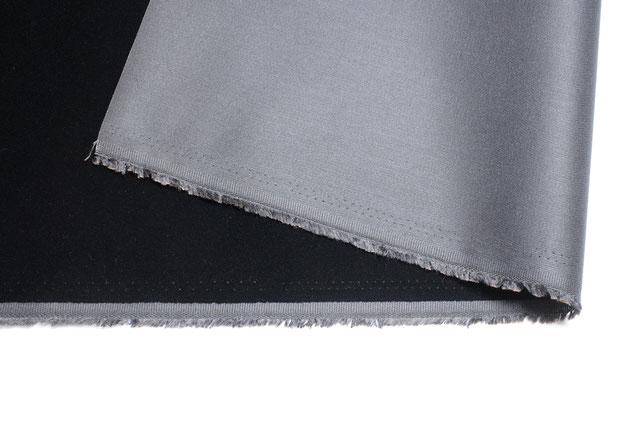
Rayon base fabric with electrostatically flocked rayon pile — flexible for use as a cover, curtain or optical lining.

✓ For industry & research

Developed for near-infrared test environments, sensor development, optical laboratories, LiDAR systems and industrial machine vision.

Why IR Flock Sheet?

Many black materials appear very dark in visible light, but reflect significantly more strongly in the near-infrared range. This is exactly where many modern sensor systems operate today — from proximity sensors and Time-of-Flight cameras to LiDAR, face recognition systems and automotive cameras. For these applications, an ordinary black material is often not sufficient.

The IR Flock Sheet was developed as a specialized material for preventing near-infrared reflections and stray light. By incorporating carbon into the flocked pile structure, high absorption performance is achieved both in the visible range and in the near-infrared range.

The material is especially interesting for industrial development environments, test chambers, optical measurement setups and prototypes where reproducible conditions, low residual reflectance and controlled light guidance are critical. It is suitable not only as a covering material, but also as a curtain, background, masking material or large-area lining for near-infrared test environments.

Product video

Key benefits

  • Specifically developed for visible light and Near-Infrared applications
  • Total reflectance of 0.5% or less from the visible to the near-infrared range
  • Very high absorption through carbon-containing flocked rayon fibers
  • Suitable for near-infrared darkrooms, test chambers and sensor environments
  • Ideal as a background material for NIR photography and industrial imaging
  • Can be used as a curtain, cover, masking material or large-area absorber material
  • Interesting for LiDAR development, Time-of-Flight cameras and proximity sensors
  • Suitable for masking unwanted objects in sensor test environments
  • Helpful for reducing stray light in motion capture and NIR measurement systems
  • Flexible material that can be cut and processed into curtain form
  • Suitable for optical laboratories, development departments, universities and OEM prototyping
  • More strongly focused on Near-Infrared applications than many ordinary black fabrics
  • Can help improve reproducible measurement conditions
  • Suitable for industrial applications requiring large-area coverage
  • A powerful alternative to standard black materials in NIR test environments

Application areas

The IR Flock Sheet is especially interesting for industrial, scientific and optical applications where visible light and Near-Infrared radiation must be controlled. The following examples show typical areas of use and explain why a strongly NIR-absorbing material can be critical in these applications.

📡 LiDAR development

LiDAR systems often operate in the near-infrared range and are sensitive to unwanted internal reflections, stray light and back reflections from the test environment. The IR Flock Sheet can be used in test setups, prototype housings, optical tunnels or calibration environments to reduce such reflections.

Especially during sensor development, receiver optics evaluation or housing optimization, a strongly NIR-absorbing material can help create more reproducible measurement conditions. This makes it easier to control environmental interference and compare development data more reliably.

🚗 Automotive Driver Monitoring Systems

Driver Monitoring Systems frequently use Near-Infrared illumination to capture the driver's eyes, face, head position or attention even under changing lighting conditions. Reflective surfaces in the test setup can distort measurement results or generate unwanted signals.

The IR Flock Sheet can be used in development and testing environments to minimize reflective background areas. This allows test conditions for NIR cameras, driver monitoring and optical in-cabin sensing to be controlled more effectively.

👥 Occupant Monitoring Systems

Occupant Monitoring Systems detect people, seating positions, movements or presence inside a vehicle interior. These systems often work with NIR illumination, which means that materials that appear dark in visible light may reflect disturbingly in the NIR range.

With IR Flock Sheet, test chambers, dummy environments, sensor housings or interior test setups can be made less reflective. This supports a more stable evaluation of camera and sensor data during the development phase.

📷 Face recognition & biometric systems

Modern face recognition and biometric systems frequently use Near-Infrared light to capture faces independently of visible lighting conditions. Reflective backgrounds or side stray-light sources can lead to inaccurate or less stable measurement results.

The IR Flock Sheet can be used as a low-reflection background or masking material in test environments. This allows biometric camera systems to be developed, calibrated and compared under more controlled conditions.

⏱ Time-of-Flight cameras

Time-of-Flight cameras measure differences in light signal travel time and can be sensitive to multiple reflections. Especially in the near-infrared range, unwanted reflections inside a test environment can influence depth measurement accuracy.

IR Flock Sheet can help mask or darken non-relevant surfaces in ToF test environments. This is particularly useful when developing 3D cameras, robotics systems, gesture recognition or industrial depth sensors.

🤖 Machine vision & industrial image processing

In industrial machine vision systems, reflections and stray light can impair camera detection performance. This is especially true when cameras or illumination systems operate in the visible and near-infrared spectrum.

The IR Flock Sheet can be used as a background, shield or internal lining in inspection stations. This can improve contrast, reduce stray light and create more stable imaging conditions for automated inspection processes.

🏭 Automated Optical Inspection (AOI)

AOI systems in electronics, semiconductor or precision manufacturing require controlled lighting conditions to reliably detect even the smallest defects. Reflective surfaces in the surrounding area can make measurements more difficult or cause misinterpretations.

IR Flock Sheet can be used in inspection chambers, covers, optical baffles or background surfaces to reduce disturbing reflections. This is especially relevant when the inspection optics operate in the visible and near-infrared spectral range.

🔬 Optical laboratories & photonics research

Optical laboratories often require materials that control stray light and reduce unwanted reflections in experimental setups. However, standard black materials may reflect significantly more strongly in the near-infrared range than expected.

The IR Flock Sheet is suitable for optical benches, experimental housings, shielding and low-reflection backgrounds. It supports researchers in creating reproducible conditions in experiments involving visible and near-infrared light.

🎯 Sensor calibration

A controlled environment is critical when calibrating near-infrared sensors. Unwanted reflections can influence calibration values and reduce the comparability of measurement series.

IR Flock Sheet can be used as a dark background, curtain or masking material in calibration setups. This helps reduce unwanted signals and allows sensors to be tested under more consistent conditions.

📸 Near-Infrared photography

In Near-Infrared photography, many materials appear differently than they do in visible light. Fabrics or surfaces that look black to the human eye can reflect surprisingly brightly in the NIR range.

The IR Flock Sheet is suitable as a background material for NIR photography, scientific imaging or technical documentation. It helps create a truly dark background in the near-infrared range.

🕺 Near-Infrared motion capture

Motion capture systems often use infrared or near-infrared light to detect markers, movements or body positions. Reflective materials in the room can generate unwanted signals.

IR Flock Sheet can be used for shielding, masking or lining problematic areas. This reduces unwanted reflections and stabilizes the detection of markers or movements.

🧪 Scientific imaging

In scientific imaging, visible and near-infrared wavelengths are frequently used to analyze materials, biological samples or technical systems. Reflections from the environment can degrade the signal-to-noise ratio.

IR Flock Sheet can be used as a low-reflection background or shielding material. This can make measurements cleaner, higher in contrast and more reproducible.

💉 Medical imaging & biomedical research

Near-Infrared methods are frequently used in biomedical research for imaging, optical analysis or experimental diagnostics. Unwanted reflections can make the evaluation of optical signals more difficult.

The IR Flock Sheet can be used as a strongly absorbing material in laboratory setups, housings or test environments. Suitability for medical devices or regulated applications must always be verified within the specific system.

🔍 Semiconductor and wafer inspection

The semiconductor industry uses optical inspection and alignment systems where reflection control is critical. Especially in precise test setups, even small amounts of stray light can affect image quality or measurement stability.

IR Flock Sheet can be used in test fixtures, optical covers or development environments to minimize unwanted reflections. For cleanroom and particle requirements, however, possible fiber loss caused by the flock structure must be considered.

🚀 Aerospace sensor testing

In aerospace development, optical sensors and camera systems are often tested under highly controlled conditions. Stray light and unwanted reflections can influence the evaluation of prototypes and optical payloads.

IR Flock Sheet can be used as an NIR-absorbing material in laboratory environments, test stands or non-flight-critical prototyping setups. Additional qualifications and material testing are required for final aerospace-qualified systems.

🦾 Robotics & autonomous systems

Robots and autonomous systems often use cameras, depth sensors, ToF modules or NIR illumination for navigation and object detection. In development environments, reflections from walls, fixtures or test objects can influence sensor evaluation.

The IR Flock Sheet can be used as a background, curtain or masking material to reduce disturbing back reflections. This makes it easier to control test setups for navigation sensors and vision systems.

🏢 OEM prototyping & industrial development

For OEMs and development departments, the IR Flock Sheet is especially interesting because it can be flexibly cut, used as a fabric or processed into curtain form. This makes it well suited for prototypes, experimental systems and temporary test environments.

Typical applications include sensor housings, test tunnels, calibration chambers, optical baffles, shielding and large NIR-absorbing background surfaces. The material allows fast adjustments during the development phase.

🏫 Universities & research institutes

Universities and research institutes often need flexible materials for optical experiments, demonstrations and laboratory setups. The IR Flock Sheet is suitable for projects where visible light and near-infrared must be controlled.

It can be used in teaching laboratories, photonics research, sensor development, robotics projects and scientific imaging. The ability to use larger areas as a curtain or background is particularly advantageous.

🕶 Near-Infrared darkrooms & test chambers

For NIR test chambers and low-reflection development environments, the IR Flock Sheet can be used as a dark curtain or large-area internal lining. This helps reduce reflections from walls, mounts and unwanted objects.

Especially in sensor testing, camera development or NIR photography, such an environment can improve measurement reproducibility. The material can be cut, hung or processed into curtain form for this purpose.

Near-Infrared Performance

The near-infrared range begins above visible red light and is especially important for many modern sensor applications. Typical industrial systems operate in ranges such as 850 nm, 905 nm or 940 nm, as these wavelengths are technically highly relevant for cameras, ToF sensors, LiDAR systems and biometric recognition systems.

A common problem is that a material appears black in visible light but reflects significantly more in the Near-Infrared range. The human eye does not perceive this difference, but an NIR sensor does. This is why a material specifically optimized for NIR is essential in many development and test environments.

The IR Flock Sheet was developed precisely for this challenge. It combines a flocked surface structure with carbon-containing fibers to absorb light not only superficially, but more strongly through multiple reflections within the fiber structure.

Material technology

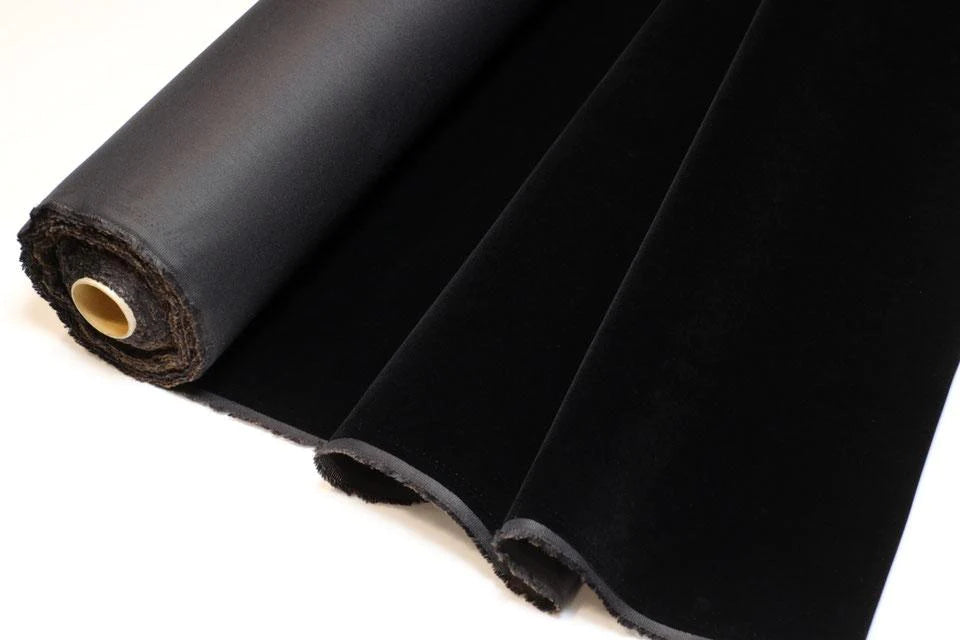
The IR Flock Sheet consists of a rayon base fabric that has been electrostatically flocked with rayon pile. This structure creates a dense, velvet-like surface with many upright fibers that do not simply reflect incoming light specularly.

The carbon bonding within the flocked pile structure improves absorption in the visible and near-infrared range. Light does not hit a flat surface; instead, it is scattered and absorbed multiple times between the fibers before it can exit again.

This principle is significantly different from smooth black films, paints or standard fabrics. Especially for larger areas, curtains and flexible test environments, the flock structure offers practical advantages because it combines strong optical performance with mechanical flexibility.

IR Flock Sheet compared to other Musou Black materials

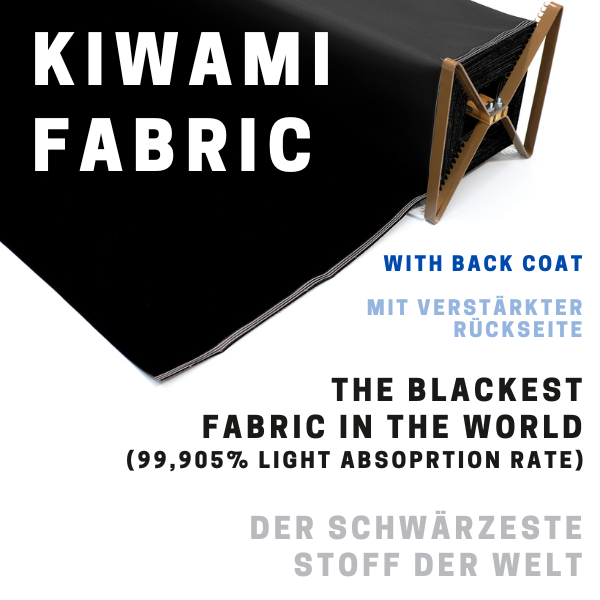
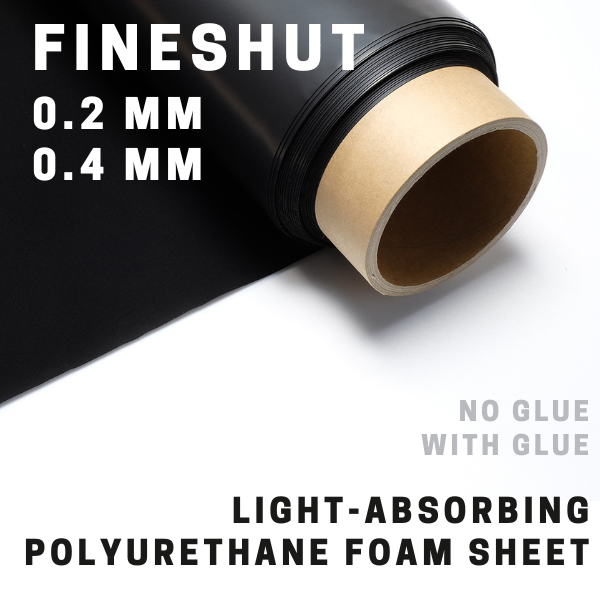
Property IR Flock Sheet VL Flock Sheet Fineshut SP KIWAMI Fabric
Main focus Visible + Near-Infrared absorption Very dark visible absorption Fiber-free optical internal applications Large-area visual blackness
Near-Infrared performance Very high Good, but not primarily optimized for it Good, but more focused on sensor environments and fiber-free performance Primarily for visible visual effect
Total reflectance 0.5% or less in the visible to NIR range Very low in the visible range Very low reflection with a fiber-free surface Very dark textile surface in the visible range
Material structure Rayon fabric with rayon flock Flock material Microporous polyurethane foam Special textile fabric
Possible fiber shedding Yes, possible due to flocking Yes, possible due to flocking No, fiber-free Textile-dependent depending on application
Cleanroom suitability Limited due to possible fiber shedding Limited due to possible fiber shedding Better suited because it is fiber-free Not primarily intended for cleanrooms
Curtain applications Very well suited Very well suited Rather limited Very well suited
Internal precision optics Use with caution due to fiber shedding Use with caution due to fiber shedding Very well suited Not primarily developed for this purpose
Typical target group Sensor development, LiDAR, research, OEMs Optics, photography, general stray light reduction Cameras, sensor environments, optical assemblies Home theater, stage, large visual surfaces

Technical specifications

Product IR Flock Sheet
Material type Rayon base fabric with electrostatically flocked rayon pile
Composition Rayon base fabric / rayon pile
Adhesive backing No adhesive tape
Thickness 0.9 mm ± 0.2 mm
Optical property Very low reflection from the visible to near-infrared range
Total reflectance 0.5% or less from the visible to Near-Infrared range
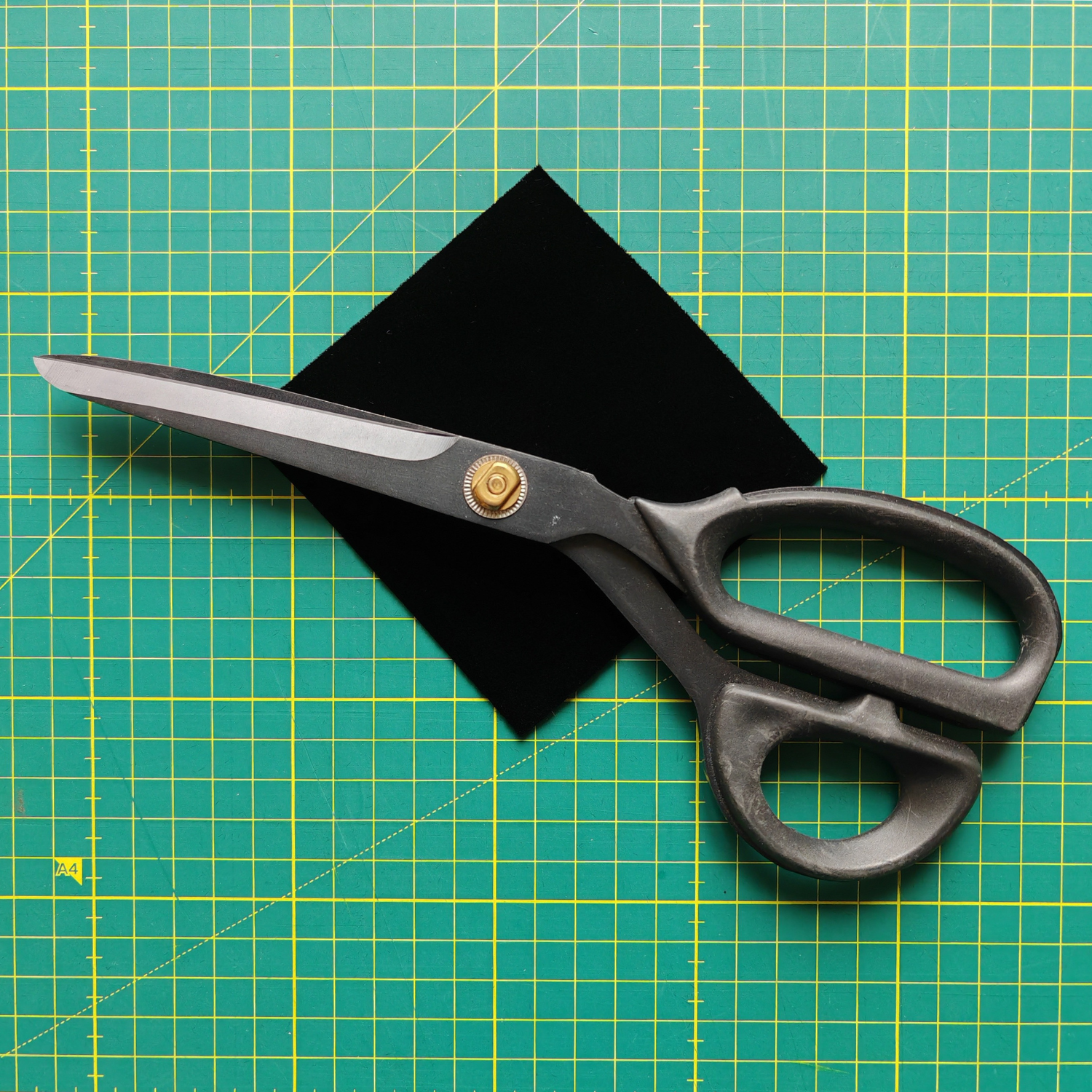
Processing Can be cut, used as a cover, hung or sewn into curtain form
Typical applications NIR darkrooms, sensor test environments, LiDAR, machine vision, calibration, NIR photography
Note on fiber shedding Small dust or fiber particles may be generated due to the flocking process
Cleanroom or precision equipment Use only with caution if cleanliness is the highest priority
Wrinkle treatment Steam from an iron may help, without directly touching the material

Processing and handling notes

The IR Flock Sheet can be used as a fabric to cover objects, or it can be sewn into curtain form and hung. It is especially suitable for larger areas, flexible test setups and temporary or permanent NIR-absorbing backgrounds.

As with other flocked materials, minor fiber or dust loss may occur due to the flocking process. For this reason, the material should be used with caution when absolute cleanliness is the highest priority or when it is intended for internal components of precision equipment.

In case of wrinkles or creases, steam from an iron may help improve the condition. However, the iron must not touch the material directly in order to avoid damaging the flocked surface.

Choosing the right material

Choose IR Flock Sheet if your application requires surfaces that are black in the visible range and also low-reflective in the Near-Infrared range. It is especially suitable for LiDAR test environments, near-infrared sensing, NIR photography, motion capture, proximity sensors and industrial test chambers.

If your application primarily operates in the visible range, VL Flock Sheet may be a suitable alternative. If fiber-free performance and use in direct proximity to sensitive sensors are critical, Fineshut SP is often the better choice. For large visual surfaces, home theater, stage or decorative applications, KIWAMI Fabric is often more practical.

Shipping note for larger cut sizes

For sizes of 95 cm x 100 cm and longer, additional shipping costs for oversized packages may apply due to the package size.

Germany €22.90
Austria €12.90
Belgium, Czechia, Denmark, Hungary, Luxembourg, Netherlands, Poland, Romania, Slovakia, Slovenia, Cyprus €19.90
Bulgaria, Croatia, Estonia, Finland, France, Ireland, Italy, Latvia, Lithuania, Portugal, Spain, Sweden, Monaco €29.90
Rest of world approx. €34.90 or higher depending on destination

Frequently asked questions

What is the main difference between IR Flock Sheet and VL Flock Sheet?

The IR Flock Sheet was specifically developed for high absorption in the visible and near-infrared range. The VL Flock Sheet is especially focused on very low reflection in the visible range.

Is the material suitable for 850 nm, 905 nm or 940 nm?

The IR Flock Sheet was developed for Near-Infrared applications and is therefore especially interesting for typical NIR sensor wavelengths. Suitability should be tested within the specific optical system and measurement range.

Can the IR Flock Sheet be used for LiDAR?

Yes, it can be used in LiDAR test environments, prototypes, sensor chambers and calibration setups to reduce stray light and unwanted reflections.

Can the material be used as a curtain?

Yes. The IR Flock Sheet can be used as a fabric and processed into curtain form. It is therefore well suited for NIR darkrooms, test chambers and large low-reflection backgrounds.

Does the material have an adhesive backing?

No. The IR Flock Sheet does not have adhesive tape on the back.

Can the material be cut to size?

Yes. The material can be cut to size. When cutting, however, it should be taken into account that small fibers or particles may be generated due to the flock structure.

Can the material be sewn?

Yes. The material can be sewn into curtain form and then hung.

Is the IR Flock Sheet suitable for cleanrooms?

Only to a limited extent. Since small dust or fiber particles may be generated due to the flocking process, it should not be used without testing in areas where cleanliness is the highest priority.

Can the material be used in precision instruments?

For internal components of precision instruments, caution is required because fiber shedding caused by flocking is possible. For such applications, Fineshut SP may be more suitable due to its fiber-free structure.

Can it replace black paint?

For large-area NIR-absorbing applications, curtains and test environments, IR Flock Sheet can be a significantly better solution than black paint. For small, fixed objects, paint may be easier to apply.

How can wrinkles be removed?

For wrinkles or creases, steam from an iron may help. However, the iron must not touch the material directly.

Which target groups is the material especially suitable for?

The IR Flock Sheet is especially intended for sensor developers, LiDAR manufacturers, optical laboratories, automotive suppliers, machine vision integrators, research institutes and OEM development departments.

Industrial Near-Infrared absorber material for professional optical systems

The IR Flock Sheet combines very low reflectance in the visible and near-infrared range with flexible textile processing. It is a powerful solution for sensor development, LiDAR, machine vision, NIR test environments and industrial optical applications.

IR FLOCK SHEET

Near-Infrared Anti-Reflection Material for Industrial Optical Systems

The IR Flock Sheet is a highly absorbing, electrostatically flocked rayon material specifically developed to reduce reflections and stray light in the visible and near-infrared spectral range. It was designed for applications where ordinary black materials no longer appear sufficiently dark in the Near-Infrared (NIR) range — for example in LiDAR development, near-infrared sensing, machine vision, sensor calibration, optical test environments and industrial measurement systems.

✓ Visible + NIR absorption

Very high light absorption not only in the visible range, but also in the Near-Infrared range.

✓ ≤ 0.5% total reflectance

The IR Flock Sheet achieves a total reflectance of 0.5% or less from the visible to the near-infrared range.

✓ Flexible flocked surface

Rayon base fabric with electrostatically flocked rayon pile — flexible for use as a cover, curtain or optical lining.

✓ For industry & research

Developed for near-infrared test environments, sensor development, optical laboratories, LiDAR systems and industrial machine vision.

Why IR Flock Sheet?

Many black materials appear very dark in visible light, but reflect significantly more strongly in the near-infrared range. This is exactly where many modern sensor systems operate today — from proximity sensors and Time-of-Flight cameras to LiDAR, face recognition systems and automotive cameras. For these applications, an ordinary black material is often not sufficient.

The IR Flock Sheet was developed as a specialized material for preventing near-infrared reflections and stray light. By incorporating carbon into the flocked pile structure, high absorption performance is achieved both in the visible range and in the near-infrared range.

The material is especially interesting for industrial development environments, test chambers, optical measurement setups and prototypes where reproducible conditions, low residual reflectance and controlled light guidance are critical. It is suitable not only as a covering material, but also as a curtain, background, masking material or large-area lining for near-infrared test environments.

Product video

Key benefits

  • Specifically developed for visible light and Near-Infrared applications
  • Total reflectance of 0.5% or less from the visible to the near-infrared range
  • Very high absorption through carbon-containing flocked rayon fibers
  • Suitable for near-infrared darkrooms, test chambers and sensor environments
  • Ideal as a background material for NIR photography and industrial imaging
  • Can be used as a curtain, cover, masking material or large-area absorber material
  • Interesting for LiDAR development, Time-of-Flight cameras and proximity sensors
  • Suitable for masking unwanted objects in sensor test environments
  • Helpful for reducing stray light in motion capture and NIR measurement systems
  • Flexible material that can be cut and processed into curtain form
  • Suitable for optical laboratories, development departments, universities and OEM prototyping
  • More strongly focused on Near-Infrared applications than many ordinary black fabrics
  • Can help improve reproducible measurement conditions
  • Suitable for industrial applications requiring large-area coverage
  • A powerful alternative to standard black materials in NIR test environments

Application areas

The IR Flock Sheet is especially interesting for industrial, scientific and optical applications where visible light and Near-Infrared radiation must be controlled. The following examples show typical areas of use and explain why a strongly NIR-absorbing material can be critical in these applications.

📡 LiDAR development

LiDAR systems often operate in the near-infrared range and are sensitive to unwanted internal reflections, stray light and back reflections from the test environment. The IR Flock Sheet can be used in test setups, prototype housings, optical tunnels or calibration environments to reduce such reflections.

Especially during sensor development, receiver optics evaluation or housing optimization, a strongly NIR-absorbing material can help create more reproducible measurement conditions. This makes it easier to control environmental interference and compare development data more reliably.

🚗 Automotive Driver Monitoring Systems

Driver Monitoring Systems frequently use Near-Infrared illumination to capture the driver's eyes, face, head position or attention even under changing lighting conditions. Reflective surfaces in the test setup can distort measurement results or generate unwanted signals.

The IR Flock Sheet can be used in development and testing environments to minimize reflective background areas. This allows test conditions for NIR cameras, driver monitoring and optical in-cabin sensing to be controlled more effectively.

👥 Occupant Monitoring Systems

Occupant Monitoring Systems detect people, seating positions, movements or presence inside a vehicle interior. These systems often work with NIR illumination, which means that materials that appear dark in visible light may reflect disturbingly in the NIR range.

With IR Flock Sheet, test chambers, dummy environments, sensor housings or interior test setups can be made less reflective. This supports a more stable evaluation of camera and sensor data during the development phase.

📷 Face recognition & biometric systems

Modern face recognition and biometric systems frequently use Near-Infrared light to capture faces independently of visible lighting conditions. Reflective backgrounds or side stray-light sources can lead to inaccurate or less stable measurement results.

The IR Flock Sheet can be used as a low-reflection background or masking material in test environments. This allows biometric camera systems to be developed, calibrated and compared under more controlled conditions.

⏱ Time-of-Flight cameras

Time-of-Flight cameras measure differences in light signal travel time and can be sensitive to multiple reflections. Especially in the near-infrared range, unwanted reflections inside a test environment can influence depth measurement accuracy.

IR Flock Sheet can help mask or darken non-relevant surfaces in ToF test environments. This is particularly useful when developing 3D cameras, robotics systems, gesture recognition or industrial depth sensors.

🤖 Machine vision & industrial image processing

In industrial machine vision systems, reflections and stray light can impair camera detection performance. This is especially true when cameras or illumination systems operate in the visible and near-infrared spectrum.

The IR Flock Sheet can be used as a background, shield or internal lining in inspection stations. This can improve contrast, reduce stray light and create more stable imaging conditions for automated inspection processes.

🏭 Automated Optical Inspection (AOI)

AOI systems in electronics, semiconductor or precision manufacturing require controlled lighting conditions to reliably detect even the smallest defects. Reflective surfaces in the surrounding area can make measurements more difficult or cause misinterpretations.

IR Flock Sheet can be used in inspection chambers, covers, optical baffles or background surfaces to reduce disturbing reflections. This is especially relevant when the inspection optics operate in the visible and near-infrared spectral range.

🔬 Optical laboratories & photonics research

Optical laboratories often require materials that control stray light and reduce unwanted reflections in experimental setups. However, standard black materials may reflect significantly more strongly in the near-infrared range than expected.

The IR Flock Sheet is suitable for optical benches, experimental housings, shielding and low-reflection backgrounds. It supports researchers in creating reproducible conditions in experiments involving visible and near-infrared light.

🎯 Sensor calibration

A controlled environment is critical when calibrating near-infrared sensors. Unwanted reflections can influence calibration values and reduce the comparability of measurement series.

IR Flock Sheet can be used as a dark background, curtain or masking material in calibration setups. This helps reduce unwanted signals and allows sensors to be tested under more consistent conditions.

📸 Near-Infrared photography

In Near-Infrared photography, many materials appear differently than they do in visible light. Fabrics or surfaces that look black to the human eye can reflect surprisingly brightly in the NIR range.

The IR Flock Sheet is suitable as a background material for NIR photography, scientific imaging or technical documentation. It helps create a truly dark background in the near-infrared range.

🕺 Near-Infrared motion capture

Motion capture systems often use infrared or near-infrared light to detect markers, movements or body positions. Reflective materials in the room can generate unwanted signals.

IR Flock Sheet can be used for shielding, masking or lining problematic areas. This reduces unwanted reflections and stabilizes the detection of markers or movements.

🧪 Scientific imaging

In scientific imaging, visible and near-infrared wavelengths are frequently used to analyze materials, biological samples or technical systems. Reflections from the environment can degrade the signal-to-noise ratio.

IR Flock Sheet can be used as a low-reflection background or shielding material. This can make measurements cleaner, higher in contrast and more reproducible.

💉 Medical imaging & biomedical research

Near-Infrared methods are frequently used in biomedical research for imaging, optical analysis or experimental diagnostics. Unwanted reflections can make the evaluation of optical signals more difficult.

The IR Flock Sheet can be used as a strongly absorbing material in laboratory setups, housings or test environments. Suitability for medical devices or regulated applications must always be verified within the specific system.

🔍 Semiconductor and wafer inspection

The semiconductor industry uses optical inspection and alignment systems where reflection control is critical. Especially in precise test setups, even small amounts of stray light can affect image quality or measurement stability.

IR Flock Sheet can be used in test fixtures, optical covers or development environments to minimize unwanted reflections. For cleanroom and particle requirements, however, possible fiber loss caused by the flock structure must be considered.

🚀 Aerospace sensor testing

In aerospace development, optical sensors and camera systems are often tested under highly controlled conditions. Stray light and unwanted reflections can influence the evaluation of prototypes and optical payloads.

IR Flock Sheet can be used as an NIR-absorbing material in laboratory environments, test stands or non-flight-critical prototyping setups. Additional qualifications and material testing are required for final aerospace-qualified systems.

🦾 Robotics & autonomous systems

Robots and autonomous systems often use cameras, depth sensors, ToF modules or NIR illumination for navigation and object detection. In development environments, reflections from walls, fixtures or test objects can influence sensor evaluation.

The IR Flock Sheet can be used as a background, curtain or masking material to reduce disturbing back reflections. This makes it easier to control test setups for navigation sensors and vision systems.

🏢 OEM prototyping & industrial development

For OEMs and development departments, the IR Flock Sheet is especially interesting because it can be flexibly cut, used as a fabric or processed into curtain form. This makes it well suited for prototypes, experimental systems and temporary test environments.

Typical applications include sensor housings, test tunnels, calibration chambers, optical baffles, shielding and large NIR-absorbing background surfaces. The material allows fast adjustments during the development phase.

🏫 Universities & research institutes

Universities and research institutes often need flexible materials for optical experiments, demonstrations and laboratory setups. The IR Flock Sheet is suitable for projects where visible light and near-infrared must be controlled.

It can be used in teaching laboratories, photonics research, sensor development, robotics projects and scientific imaging. The ability to use larger areas as a curtain or background is particularly advantageous.

🕶 Near-Infrared darkrooms & test chambers

For NIR test chambers and low-reflection development environments, the IR Flock Sheet can be used as a dark curtain or large-area internal lining. This helps reduce reflections from walls, mounts and unwanted objects.

Especially in sensor testing, camera development or NIR photography, such an environment can improve measurement reproducibility. The material can be cut, hung or processed into curtain form for this purpose.

Near-Infrared Performance

The near-infrared range begins above visible red light and is especially important for many modern sensor applications. Typical industrial systems operate in ranges such as 850 nm, 905 nm or 940 nm, as these wavelengths are technically highly relevant for cameras, ToF sensors, LiDAR systems and biometric recognition systems.

A common problem is that a material appears black in visible light but reflects significantly more in the Near-Infrared range. The human eye does not perceive this difference, but an NIR sensor does. This is why a material specifically optimized for NIR is essential in many development and test environments.

The IR Flock Sheet was developed precisely for this challenge. It combines a flocked surface structure with carbon-containing fibers to absorb light not only superficially, but more strongly through multiple reflections within the fiber structure.

Material technology

The IR Flock Sheet consists of a rayon base fabric that has been electrostatically flocked with rayon pile. This structure creates a dense, velvet-like surface with many upright fibers that do not simply reflect incoming light specularly.

The carbon bonding within the flocked pile structure improves absorption in the visible and near-infrared range. Light does not hit a flat surface; instead, it is scattered and absorbed multiple times between the fibers before it can exit again.

This principle is significantly different from smooth black films, paints or standard fabrics. Especially for larger areas, curtains and flexible test environments, the flock structure offers practical advantages because it combines strong optical performance with mechanical flexibility.

IR Flock Sheet compared to other Musou Black materials

Property IR Flock Sheet VL Flock Sheet Fineshut SP KIWAMI Fabric
Main focus Visible + Near-Infrared absorption Very dark visible absorption Fiber-free optical internal applications Large-area visual blackness
Near-Infrared performance Very high Good, but not primarily optimized for it Good, but more focused on sensor environments and fiber-free performance Primarily for visible visual effect
Total reflectance 0.5% or less in the visible to NIR range Very low in the visible range Very low reflection with a fiber-free surface Very dark textile surface in the visible range
Material structure Rayon fabric with rayon flock Flock material Microporous polyurethane foam Special textile fabric
Possible fiber shedding Yes, possible due to flocking Yes, possible due to flocking No, fiber-free Textile-dependent depending on application
Cleanroom suitability Limited due to possible fiber shedding Limited due to possible fiber shedding Better suited because it is fiber-free Not primarily intended for cleanrooms
Curtain applications Very well suited Very well suited Rather limited Very well suited
Internal precision optics Use with caution due to fiber shedding Use with caution due to fiber shedding Very well suited Not primarily developed for this purpose
Typical target group Sensor development, LiDAR, research, OEMs Optics, photography, general stray light reduction Cameras, sensor environments, optical assemblies Home theater, stage, large visual surfaces

Technical specifications

Product IR Flock Sheet
Material type Rayon base fabric with electrostatically flocked rayon pile
Composition Rayon base fabric / rayon pile
Adhesive backing No adhesive tape
Thickness 0.9 mm ± 0.2 mm
Optical property Very low reflection from the visible to near-infrared range
Total reflectance 0.5% or less from the visible to Near-Infrared range
Processing Can be cut, used as a cover, hung or sewn into curtain form
Typical applications NIR darkrooms, sensor test environments, LiDAR, machine vision, calibration, NIR photography
Note on fiber shedding Small dust or fiber particles may be generated due to the flocking process
Cleanroom or precision equipment Use only with caution if cleanliness is the highest priority
Wrinkle treatment Steam from an iron may help, without directly touching the material

Processing and handling notes

The IR Flock Sheet can be used as a fabric to cover objects, or it can be sewn into curtain form and hung. It is especially suitable for larger areas, flexible test setups and temporary or permanent NIR-absorbing backgrounds.

As with other flocked materials, minor fiber or dust loss may occur due to the flocking process. For this reason, the material should be used with caution when absolute cleanliness is the highest priority or when it is intended for internal components of precision equipment.

In case of wrinkles or creases, steam from an iron may help improve the condition. However, the iron must not touch the material directly in order to avoid damaging the flocked surface.

Choosing the right material

Choose IR Flock Sheet if your application requires surfaces that are black in the visible range and also low-reflective in the Near-Infrared range. It is especially suitable for LiDAR test environments, near-infrared sensing, NIR photography, motion capture, proximity sensors and industrial test chambers.

If your application primarily operates in the visible range, VL Flock Sheet may be a suitable alternative. If fiber-free performance and use in direct proximity to sensitive sensors are critical, Fineshut SP is often the better choice. For large visual surfaces, home theater, stage or decorative applications, KIWAMI Fabric is often more practical.

Shipping note for larger cut sizes

For sizes of 95 cm x 100 cm and longer, additional shipping costs for oversized packages may apply due to the package size.

Germany €22.90
Austria €12.90
Belgium, Czechia, Denmark, Hungary, Luxembourg, Netherlands, Poland, Romania, Slovakia, Slovenia, Cyprus €19.90
Bulgaria, Croatia, Estonia, Finland, France, Ireland, Italy, Latvia, Lithuania, Portugal, Spain, Sweden, Monaco €29.90
Rest of world approx. €34.90 or higher depending on destination

Frequently asked questions

What is the main difference between IR Flock Sheet and VL Flock Sheet?

The IR Flock Sheet was specifically developed for high absorption in the visible and near-infrared range. The VL Flock Sheet is especially focused on very low reflection in the visible range.

Is the material suitable for 850 nm, 905 nm or 940 nm?

The IR Flock Sheet was developed for Near-Infrared applications and is therefore especially interesting for typical NIR sensor wavelengths. Suitability should be tested within the specific optical system and measurement range.

Can the IR Flock Sheet be used for LiDAR?

Yes, it can be used in LiDAR test environments, prototypes, sensor chambers and calibration setups to reduce stray light and unwanted reflections.

Can the material be used as a curtain?

Yes. The IR Flock Sheet can be used as a fabric and processed into curtain form. It is therefore well suited for NIR darkrooms, test chambers and large low-reflection backgrounds.

Does the material have an adhesive backing?

No. The IR Flock Sheet does not have adhesive tape on the back.

Can the material be cut to size?

Yes. The material can be cut to size. When cutting, however, it should be taken into account that small fibers or particles may be generated due to the flock structure.

Can the material be sewn?

Yes. The material can be sewn into curtain form and then hung.

Is the IR Flock Sheet suitable for cleanrooms?

Only to a limited extent. Since small dust or fiber particles may be generated due to the flocking process, it should not be used without testing in areas where cleanliness is the highest priority.

Can the material be used in precision instruments?

For internal components of precision instruments, caution is required because fiber shedding caused by flocking is possible. For such applications, Fineshut SP may be more suitable due to its fiber-free structure.

Can it replace black paint?

For large-area NIR-absorbing applications, curtains and test environments, IR Flock Sheet can be a significantly better solution than black paint. For small, fixed objects, paint may be easier to apply.

How can wrinkles be removed?

For wrinkles or creases, steam from an iron may help. However, the iron must not touch the material directly.

Which target groups is the material especially suitable for?

The IR Flock Sheet is especially intended for sensor developers, LiDAR manufacturers, optical laboratories, automotive suppliers, machine vision integrators, research institutes and OEM development departments.

Industrial Near-Infrared absorber material for professional optical systems

The IR Flock Sheet combines very low reflectance in the visible and near-infrared range with flexible textile processing. It is a powerful solution for sensor development, LiDAR, machine vision, NIR test environments and industrial optical applications.

IR FLOCK SHEET

Near-Infrared Anti-Reflection Material for Industrial Optical Systems

The IR Flock Sheet is a highly absorbing, electrostatically flocked rayon material specifically developed to reduce reflections and stray light in the visible and near-infrared spectral range. It was designed for applications where ordinary black materials no longer appear sufficiently dark in the Near-Infrared (NIR) range — for example in LiDAR development, near-infrared sensing, machine vision, sensor calibration, optical test environments and industrial measurement systems.

✓ Visible + NIR absorption

Very high light absorption not only in the visible range, but also in the Near-Infrared range.

✓ ≤ 0.5% total reflectance

The IR Flock Sheet achieves a total reflectance of 0.5% or less from the visible to the near-infrared range.

✓ Flexible flocked surface

Rayon base fabric with electrostatically flocked rayon pile — flexible for use as a cover, curtain or optical lining.

✓ For industry & research

Developed for near-infrared test environments, sensor development, optical laboratories, LiDAR systems and industrial machine vision.

Why IR Flock Sheet?

Many black materials appear very dark in visible light, but reflect significantly more strongly in the near-infrared range. This is exactly where many modern sensor systems operate today — from proximity sensors and Time-of-Flight cameras to LiDAR, face recognition systems and automotive cameras. For these applications, an ordinary black material is often not sufficient.

The IR Flock Sheet was developed as a specialized material for preventing near-infrared reflections and stray light. By incorporating carbon into the flocked pile structure, high absorption performance is achieved both in the visible range and in the near-infrared range.

The material is especially interesting for industrial development environments, test chambers, optical measurement setups and prototypes where reproducible conditions, low residual reflectance and controlled light guidance are critical. It is suitable not only as a covering material, but also as a curtain, background, masking material or large-area lining for near-infrared test environments.

Product video

Key benefits

  • Specifically developed for visible light and Near-Infrared applications
  • Total reflectance of 0.5% or less from the visible to the near-infrared range
  • Very high absorption through carbon-containing flocked rayon fibers
  • Suitable for near-infrared darkrooms, test chambers and sensor environments
  • Ideal as a background material for NIR photography and industrial imaging
  • Can be used as a curtain, cover, masking material or large-area absorber material
  • Interesting for LiDAR development, Time-of-Flight cameras and proximity sensors
  • Suitable for masking unwanted objects in sensor test environments
  • Helpful for reducing stray light in motion capture and NIR measurement systems
  • Flexible material that can be cut and processed into curtain form
  • Suitable for optical laboratories, development departments, universities and OEM prototyping
  • More strongly focused on Near-Infrared applications than many ordinary black fabrics
  • Can help improve reproducible measurement conditions
  • Suitable for industrial applications requiring large-area coverage
  • A powerful alternative to standard black materials in NIR test environments

Application areas

The IR Flock Sheet is especially interesting for industrial, scientific and optical applications where visible light and Near-Infrared radiation must be controlled. The following examples show typical areas of use and explain why a strongly NIR-absorbing material can be critical in these applications.

📡 LiDAR development

LiDAR systems often operate in the near-infrared range and are sensitive to unwanted internal reflections, stray light and back reflections from the test environment. The IR Flock Sheet can be used in test setups, prototype housings, optical tunnels or calibration environments to reduce such reflections.

Especially during sensor development, receiver optics evaluation or housing optimization, a strongly NIR-absorbing material can help create more reproducible measurement conditions. This makes it easier to control environmental interference and compare development data more reliably.

🚗 Automotive Driver Monitoring Systems

Driver Monitoring Systems frequently use Near-Infrared illumination to capture the driver's eyes, face, head position or attention even under changing lighting conditions. Reflective surfaces in the test setup can distort measurement results or generate unwanted signals.

The IR Flock Sheet can be used in development and testing environments to minimize reflective background areas. This allows test conditions for NIR cameras, driver monitoring and optical in-cabin sensing to be controlled more effectively.

👥 Occupant Monitoring Systems

Occupant Monitoring Systems detect people, seating positions, movements or presence inside a vehicle interior. These systems often work with NIR illumination, which means that materials that appear dark in visible light may reflect disturbingly in the NIR range.

With IR Flock Sheet, test chambers, dummy environments, sensor housings or interior test setups can be made less reflective. This supports a more stable evaluation of camera and sensor data during the development phase.

📷 Face recognition & biometric systems

Modern face recognition and biometric systems frequently use Near-Infrared light to capture faces independently of visible lighting conditions. Reflective backgrounds or side stray-light sources can lead to inaccurate or less stable measurement results.

The IR Flock Sheet can be used as a low-reflection background or masking material in test environments. This allows biometric camera systems to be developed, calibrated and compared under more controlled conditions.

⏱ Time-of-Flight cameras

Time-of-Flight cameras measure differences in light signal travel time and can be sensitive to multiple reflections. Especially in the near-infrared range, unwanted reflections inside a test environment can influence depth measurement accuracy.

IR Flock Sheet can help mask or darken non-relevant surfaces in ToF test environments. This is particularly useful when developing 3D cameras, robotics systems, gesture recognition or industrial depth sensors.

🤖 Machine vision & industrial image processing

In industrial machine vision systems, reflections and stray light can impair camera detection performance. This is especially true when cameras or illumination systems operate in the visible and near-infrared spectrum.

The IR Flock Sheet can be used as a background, shield or internal lining in inspection stations. This can improve contrast, reduce stray light and create more stable imaging conditions for automated inspection processes.

🏭 Automated Optical Inspection (AOI)

AOI systems in electronics, semiconductor or precision manufacturing require controlled lighting conditions to reliably detect even the smallest defects. Reflective surfaces in the surrounding area can make measurements more difficult or cause misinterpretations.

IR Flock Sheet can be used in inspection chambers, covers, optical baffles or background surfaces to reduce disturbing reflections. This is especially relevant when the inspection optics operate in the visible and near-infrared spectral range.

🔬 Optical laboratories & photonics research

Optical laboratories often require materials that control stray light and reduce unwanted reflections in experimental setups. However, standard black materials may reflect significantly more strongly in the near-infrared range than expected.

The IR Flock Sheet is suitable for optical benches, experimental housings, shielding and low-reflection backgrounds. It supports researchers in creating reproducible conditions in experiments involving visible and near-infrared light.

🎯 Sensor calibration

A controlled environment is critical when calibrating near-infrared sensors. Unwanted reflections can influence calibration values and reduce the comparability of measurement series.

IR Flock Sheet can be used as a dark background, curtain or masking material in calibration setups. This helps reduce unwanted signals and allows sensors to be tested under more consistent conditions.

📸 Near-Infrared photography

In Near-Infrared photography, many materials appear differently than they do in visible light. Fabrics or surfaces that look black to the human eye can reflect surprisingly brightly in the NIR range.

The IR Flock Sheet is suitable as a background material for NIR photography, scientific imaging or technical documentation. It helps create a truly dark background in the near-infrared range.

🕺 Near-Infrared motion capture

Motion capture systems often use infrared or near-infrared light to detect markers, movements or body positions. Reflective materials in the room can generate unwanted signals.

IR Flock Sheet can be used for shielding, masking or lining problematic areas. This reduces unwanted reflections and stabilizes the detection of markers or movements.

🧪 Scientific imaging

In scientific imaging, visible and near-infrared wavelengths are frequently used to analyze materials, biological samples or technical systems. Reflections from the environment can degrade the signal-to-noise ratio.

IR Flock Sheet can be used as a low-reflection background or shielding material. This can make measurements cleaner, higher in contrast and more reproducible.

💉 Medical imaging & biomedical research

Near-Infrared methods are frequently used in biomedical research for imaging, optical analysis or experimental diagnostics. Unwanted reflections can make the evaluation of optical signals more difficult.

The IR Flock Sheet can be used as a strongly absorbing material in laboratory setups, housings or test environments. Suitability for medical devices or regulated applications must always be verified within the specific system.

🔍 Semiconductor and wafer inspection

The semiconductor industry uses optical inspection and alignment systems where reflection control is critical. Especially in precise test setups, even small amounts of stray light can affect image quality or measurement stability.

IR Flock Sheet can be used in test fixtures, optical covers or development environments to minimize unwanted reflections. For cleanroom and particle requirements, however, possible fiber loss caused by the flock structure must be considered.

🚀 Aerospace sensor testing

In aerospace development, optical sensors and camera systems are often tested under highly controlled conditions. Stray light and unwanted reflections can influence the evaluation of prototypes and optical payloads.

IR Flock Sheet can be used as an NIR-absorbing material in laboratory environments, test stands or non-flight-critical prototyping setups. Additional qualifications and material testing are required for final aerospace-qualified systems.

🦾 Robotics & autonomous systems

Robots and autonomous systems often use cameras, depth sensors, ToF modules or NIR illumination for navigation and object detection. In development environments, reflections from walls, fixtures or test objects can influence sensor evaluation.

The IR Flock Sheet can be used as a background, curtain or masking material to reduce disturbing back reflections. This makes it easier to control test setups for navigation sensors and vision systems.

🏢 OEM prototyping & industrial development

For OEMs and development departments, the IR Flock Sheet is especially interesting because it can be flexibly cut, used as a fabric or processed into curtain form. This makes it well suited for prototypes, experimental systems and temporary test environments.

Typical applications include sensor housings, test tunnels, calibration chambers, optical baffles, shielding and large NIR-absorbing background surfaces. The material allows fast adjustments during the development phase.

🏫 Universities & research institutes

Universities and research institutes often need flexible materials for optical experiments, demonstrations and laboratory setups. The IR Flock Sheet is suitable for projects where visible light and near-infrared must be controlled.

It can be used in teaching laboratories, photonics research, sensor development, robotics projects and scientific imaging. The ability to use larger areas as a curtain or background is particularly advantageous.

🕶 Near-Infrared darkrooms & test chambers

For NIR test chambers and low-reflection development environments, the IR Flock Sheet can be used as a dark curtain or large-area internal lining. This helps reduce reflections from walls, mounts and unwanted objects.

Especially in sensor testing, camera development or NIR photography, such an environment can improve measurement reproducibility. The material can be cut, hung or processed into curtain form for this purpose.

Near-Infrared Performance

The near-infrared range begins above visible red light and is especially important for many modern sensor applications. Typical industrial systems operate in ranges such as 850 nm, 905 nm or 940 nm, as these wavelengths are technically highly relevant for cameras, ToF sensors, LiDAR systems and biometric recognition systems.

A common problem is that a material appears black in visible light but reflects significantly more in the Near-Infrared range. The human eye does not perceive this difference, but an NIR sensor does. This is why a material specifically optimized for NIR is essential in many development and test environments.

The IR Flock Sheet was developed precisely for this challenge. It combines a flocked surface structure with carbon-containing fibers to absorb light not only superficially, but more strongly through multiple reflections within the fiber structure.

Material technology

The IR Flock Sheet consists of a rayon base fabric that has been electrostatically flocked with rayon pile. This structure creates a dense, velvet-like surface with many upright fibers that do not simply reflect incoming light specularly.

The carbon bonding within the flocked pile structure improves absorption in the visible and near-infrared range. Light does not hit a flat surface; instead, it is scattered and absorbed multiple times between the fibers before it can exit again.

This principle is significantly different from smooth black films, paints or standard fabrics. Especially for larger areas, curtains and flexible test environments, the flock structure offers practical advantages because it combines strong optical performance with mechanical flexibility.

IR Flock Sheet compared to other Musou Black materials

Property IR Flock Sheet VL Flock Sheet Fineshut SP KIWAMI Fabric
Main focus Visible + Near-Infrared absorption Very dark visible absorption Fiber-free optical internal applications Large-area visual blackness
Near-Infrared performance Very high Good, but not primarily optimized for it Good, but more focused on sensor environments and fiber-free performance Primarily for visible visual effect
Total reflectance 0.5% or less in the visible to NIR range Very low in the visible range Very low reflection with a fiber-free surface Very dark textile surface in the visible range
Material structure Rayon fabric with rayon flock Flock material Microporous polyurethane foam Special textile fabric
Possible fiber shedding Yes, possible due to flocking Yes, possible due to flocking No, fiber-free Textile-dependent depending on application
Cleanroom suitability Limited due to possible fiber shedding Limited due to possible fiber shedding Better suited because it is fiber-free Not primarily intended for cleanrooms
Curtain applications Very well suited Very well suited Rather limited Very well suited
Internal precision optics Use with caution due to fiber shedding Use with caution due to fiber shedding Very well suited Not primarily developed for this purpose
Typical target group Sensor development, LiDAR, research, OEMs Optics, photography, general stray light reduction Cameras, sensor environments, optical assemblies Home theater, stage, large visual surfaces

Technical specifications

Product IR Flock Sheet
Material type Rayon base fabric with electrostatically flocked rayon pile
Composition Rayon base fabric / rayon pile
Adhesive backing No adhesive tape
Thickness 0.9 mm ± 0.2 mm
Optical property Very low reflection from the visible to near-infrared range
Total reflectance 0.5% or less from the visible to Near-Infrared range
Processing Can be cut, used as a cover, hung or sewn into curtain form
Typical applications NIR darkrooms, sensor test environments, LiDAR, machine vision, calibration, NIR photography
Note on fiber shedding Small dust or fiber particles may be generated due to the flocking process
Cleanroom or precision equipment Use only with caution if cleanliness is the highest priority
Wrinkle treatment Steam from an iron may help, without directly touching the material

Processing and handling notes

The IR Flock Sheet can be used as a fabric to cover objects, or it can be sewn into curtain form and hung. It is especially suitable for larger areas, flexible test setups and temporary or permanent NIR-absorbing backgrounds.

As with other flocked materials, minor fiber or dust loss may occur due to the flocking process. For this reason, the material should be used with caution when absolute cleanliness is the highest priority or when it is intended for internal components of precision equipment.

In case of wrinkles or creases, steam from an iron may help improve the condition. However, the iron must not touch the material directly in order to avoid damaging the flocked surface.

Choosing the right material

Choose IR Flock Sheet if your application requires surfaces that are black in the visible range and also low-reflective in the Near-Infrared range. It is especially suitable for LiDAR test environments, near-infrared sensing, NIR photography, motion capture, proximity sensors and industrial test chambers.

If your application primarily operates in the visible range, VL Flock Sheet may be a suitable alternative. If fiber-free performance and use in direct proximity to sensitive sensors are critical, Fineshut SP is often the better choice. For large visual surfaces, home theater, stage or decorative applications, KIWAMI Fabric is often more practical.

Shipping note for larger cut sizes

For sizes of 95 cm x 100 cm and longer, additional shipping costs for oversized packages may apply due to the package size.

Germany €22.90
Austria €12.90
Belgium, Czechia, Denmark, Hungary, Luxembourg, Netherlands, Poland, Romania, Slovakia, Slovenia, Cyprus €19.90
Bulgaria, Croatia, Estonia, Finland, France, Ireland, Italy, Latvia, Lithuania, Portugal, Spain, Sweden, Monaco €29.90
Rest of world approx. €34.90 or higher depending on destination

Frequently asked questions

What is the main difference between IR Flock Sheet and VL Flock Sheet?

The IR Flock Sheet was specifically developed for high absorption in the visible and near-infrared range. The VL Flock Sheet is especially focused on very low reflection in the visible range.

Is the material suitable for 850 nm, 905 nm or 940 nm?

The IR Flock Sheet was developed for Near-Infrared applications and is therefore especially interesting for typical NIR sensor wavelengths. Suitability should be tested within the specific optical system and measurement range.

Can the IR Flock Sheet be used for LiDAR?

Yes, it can be used in LiDAR test environments, prototypes, sensor chambers and calibration setups to reduce stray light and unwanted reflections.

Can the material be used as a curtain?

Yes. The IR Flock Sheet can be used as a fabric and processed into curtain form. It is therefore well suited for NIR darkrooms, test chambers and large low-reflection backgrounds.

Does the material have an adhesive backing?

No. The IR Flock Sheet does not have adhesive tape on the back.

Can the material be cut to size?

Yes. The material can be cut to size. When cutting, however, it should be taken into account that small fibers or particles may be generated due to the flock structure.

Can the material be sewn?

Yes. The material can be sewn into curtain form and then hung.

Is the IR Flock Sheet suitable for cleanrooms?

Only to a limited extent. Since small dust or fiber particles may be generated due to the flocking process, it should not be used without testing in areas where cleanliness is the highest priority.

Can the material be used in precision instruments?

For internal components of precision instruments, caution is required because fiber shedding caused by flocking is possible. For such applications, Fineshut SP may be more suitable due to its fiber-free structure.

Can it replace black paint?

For large-area NIR-absorbing applications, curtains and test environments, IR Flock Sheet can be a significantly better solution than black paint. For small, fixed objects, paint may be easier to apply.

How can wrinkles be removed?

For wrinkles or creases, steam from an iron may help. However, the iron must not touch the material directly.

Which target groups is the material especially suitable for?

The IR Flock Sheet is especially intended for sensor developers, LiDAR manufacturers, optical laboratories, automotive suppliers, machine vision integrators, research institutes and OEM development departments.

Industrial Near-Infrared absorber material for professional optical systems

The IR Flock Sheet combines very low reflectance in the visible and near-infrared range with flexible textile processing. It is a powerful solution for sensor development, LiDAR, machine vision, NIR test environments and industrial optical applications.

* When viewed by the naked eye, each person's perception of "blackness" may differ depending on the lighting environment and other conditions. 
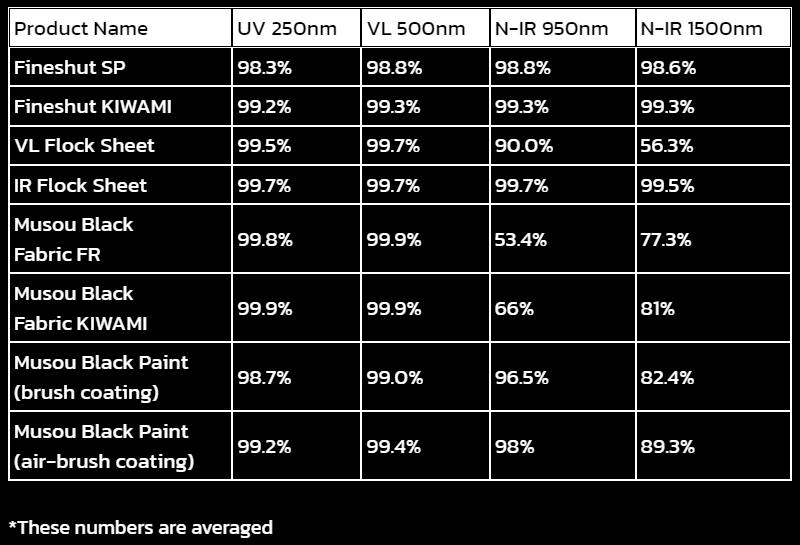
 

Total reflectance values of our materials are based on the industry-standard AOI 8° index. Total reflectance is the measurement result of combining both diffuse reflection and specular reflection measurements. AOI 8° means that the light is incident at an angle of 8° from the normal. 

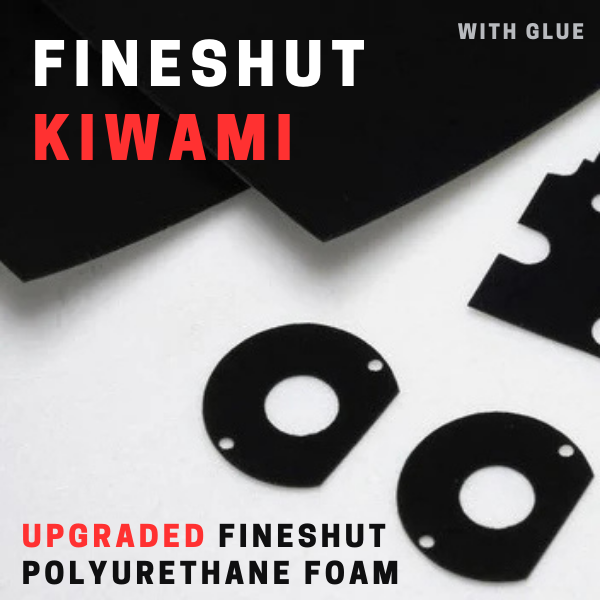
For example, based on this index, our "Foam" series consistently absorbs light from ultraviolet to near-infrared light ranges. This performance is achieved by the uneven structure derived from the foaming process and the composition of carbon atoms blended into the resin. 

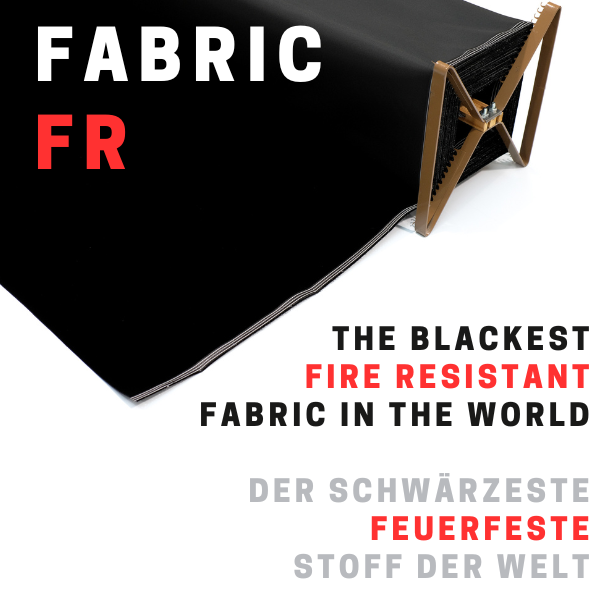
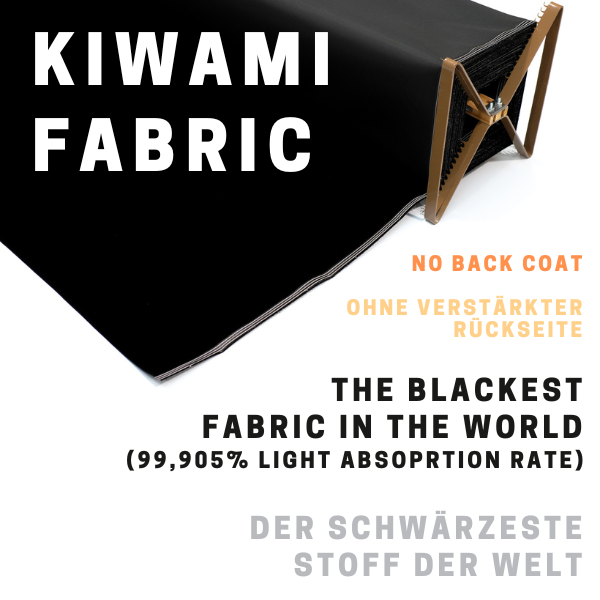
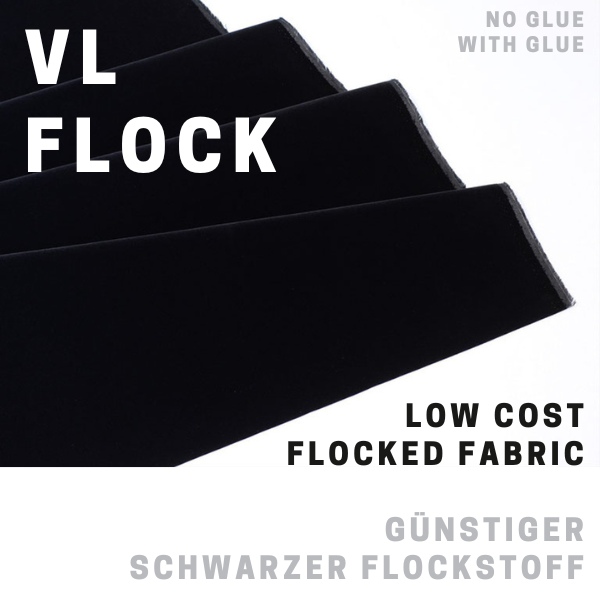
We also offer a variety of fabrics. Our entry-level “VL Flock Sheet” is cost-effective and provides strong light-absorption performance in the visible light range. In contrast, our “IR Flock Sheet” provides improved ultraviolet and excellent infrared light-absorption performance, which are the weak points of the entry-level VL Flock Sheet. Our premium fabrics, Musou Black Fabric FR and Musou Black Fabric KIWAMI, are our blackest products and have the best visible-light absorbing performances. The FR variant is treated to be fire-resistant and is great for indoor use. Meanwhile, our flagship, Musou Black Fabric KIWAMI, is the World’s Blackest Fabric in the visible-light range. 

Musou Black Paint's light-absorption performance will vary depending on the painting method, so please keep that in mind when applying. For best results, please apply with an air-brush.  
 

IR FLOCK SHEET Near-Infrared Anti-Reflection Material for Industrial Optical Systems The IR Flock Sheet is a highly absorbing, electrostatically flocked rayon material specifically developed to reduce reflections and...

img

Added to cart successfully!